The Federal Reserve is about to announce its latest interest rate decision, and the market has generally bet that it will cut interest rates by 25 basis points for the third consecutive time, but this "interest rate cut" may not be as gentle as imagined. There are obvious differences within the FOMC now. Some people are worried that employment will continue to weaken, while others believe that the easing is sufficient, and further reduction may rekindle inflation. Therefore, the so-called "hawkish interest rate cut" has become the most discussed word in the outside world-the interest rate cut is true, but it will not give a promise of further cuts in the future, and may even imply that "almost, it's time to press the pause button."
Bill English, a former senior Fed official from Yale, also bluntly stated that the most likely scenario is this combination of "eagle while falling": drop once, and then tell the market that it does not plan to move again in the near future. He even believes that the wording of the statement may return to the more cautious version of a year ago, emphasizing that "the timing of further adjustments needs to be seen", suggesting that the threshold for future interest rate cuts has been raised.
This makes the gold market particularly sensitive this week. The price of gold is hovering around $4,200, and it seems that it still maintains a certain upward momentum, but the real direction is almost entirely left to the Federal Reserve. Because the 25bp interest rate cut has already been written into the price by the market, it is unlikely to cause much waves in itself. The key is dot plot and economic forecast-if the Federal Reserve cuts its interest rate cut forecast next year to only 50bp or less, it will basically be a blow to gold; But if a more dovish path is released, for example, there is room for a larger interest rate cut in 2026, the US dollar may turn downward, and gold is expected to regain its strength.
The market is also staring at Powell's press conference. If he continues to emphasize inflation risks and his tone is cautious, gold is likely to be under heavy pressure; But if he is more worried about the labor market and shows more confidence in the decline of inflation, then gold will have a short-term opportunity to rise.
Overall, the biggest impact of this interest rate decision on gold is not "whether to cut interest rates", but "whether interest rates can continue to be lowered after the interest rate cut". If the Federal Reserve releases a hawkish signal, the price of gold is likely to be blocked or even fall back; If the dot plot is unexpectedly dovish, gold may usher in a significant rebound. This week's trend is probably like this: the direction looks at the Fed, the rhythm looks at the dot plot, and the market looks at Powell.
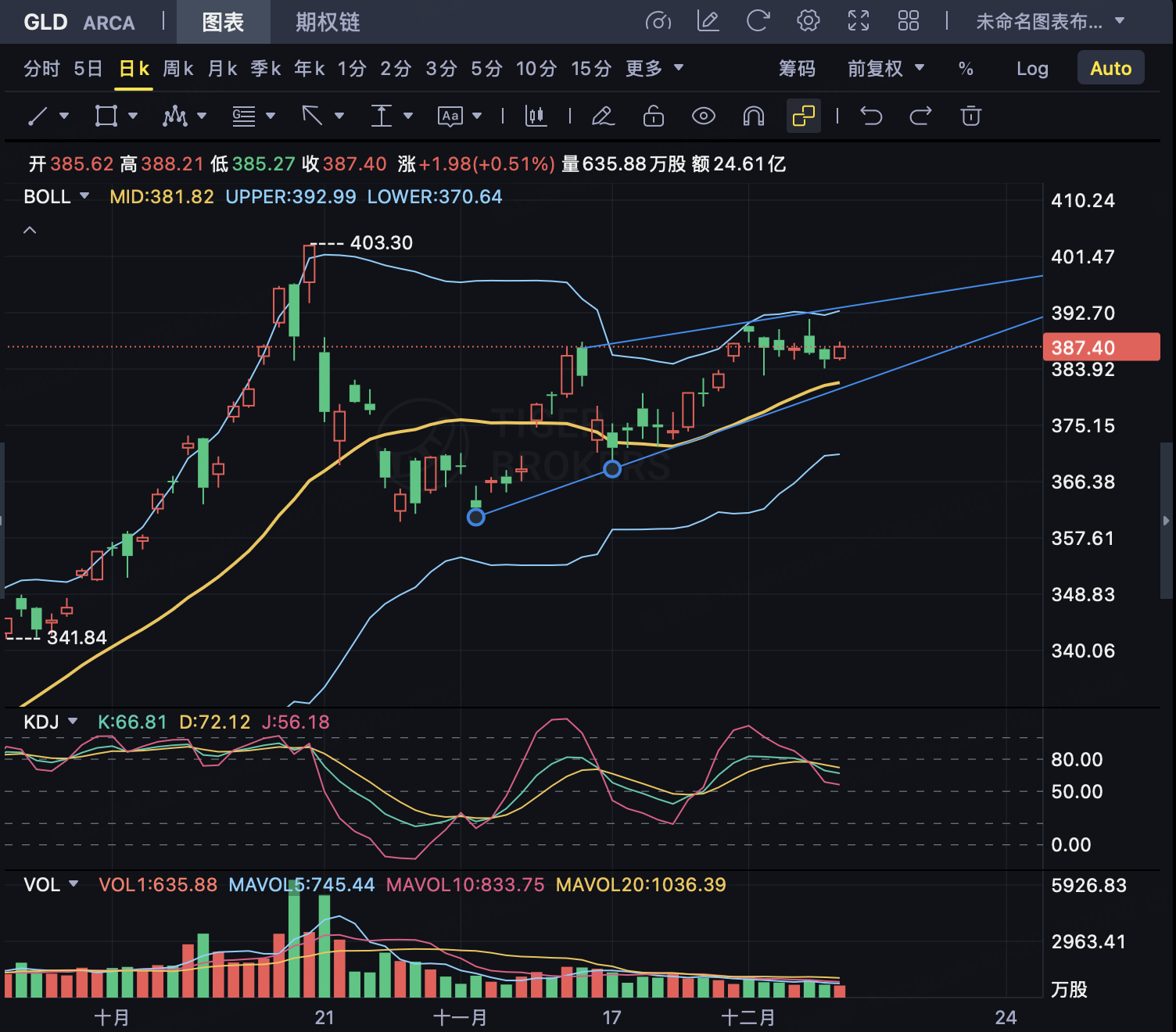
1. Strategy structure
Investors in$Gold ETF-SPDR (GLD) $Create aBull Put Spread Bull Put Spread, consisting of two Put options with the same expiration date:
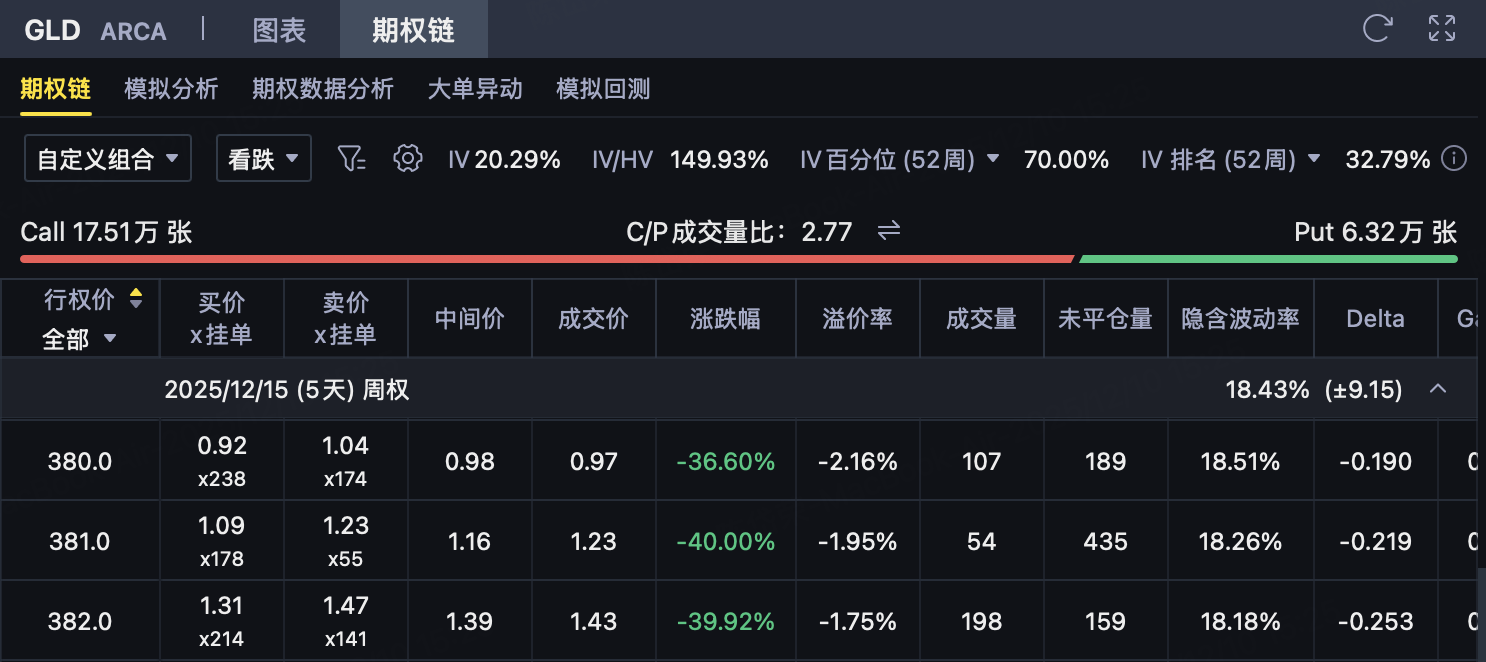
Sell higher strike price Put: K ₂ = 380, premium revenue $0.97(Higher in-the-price degree, more premium received)
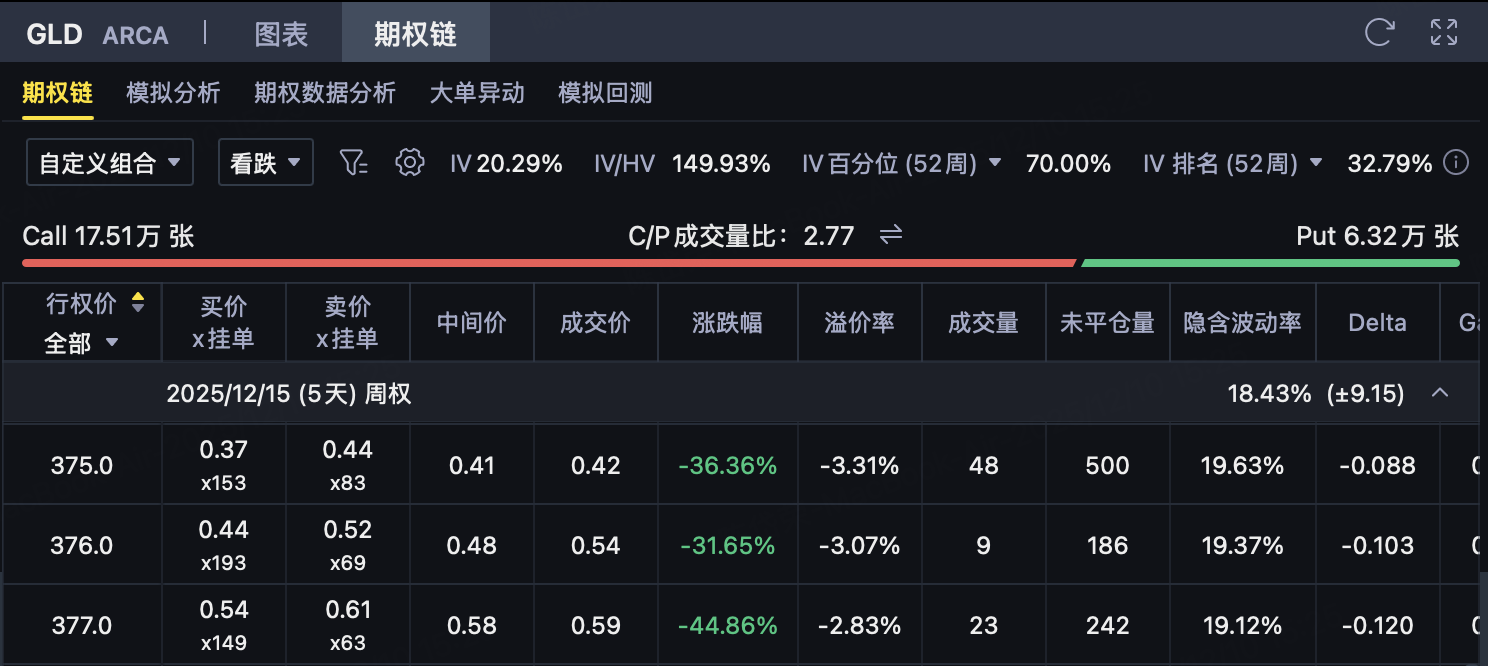
Buy lower strike Put: K ₁ = 375, premium spend $0.42(Preventing unlimited risk when GLD drops sharply)
The strategy belongs toCredit type, moreThe spread combination. Investors expect GLD price at expirationStay above the strike price or rise moderately, hoping to earn premium while controlling maximum risks.
Initial net income
Net premium (per share) = 0.97 − 0.42 =$0.55/Share
1 mouth = 100 strands, therefore:
Total net income = 0.55 × 100 =$55/contract
This is what investors get when they open positionsMaximum potential profit。
3. Maximum profit
The maximum profit is the net premium received when opening a position:
Maximum profit =$55/contract
Occurs when: When GLD expiration price≥ $380At that time, both Put shares are out of the price, the value is returned to zero, and the investor retains all premium.
4. Maximum loss
The maximum loss occurs when the GLD falls sharply below the lower strike price:
Strike spread = 380 − 375 =US $5/share
Maximum loss (per share) = 5 − 0. 55 =$4.45/Share
Total maximum loss = 4.45 × 100 =$445/contract
Occurs when: When GLD expiration price≤ $375At that time, both Put shares are in-the-money, and the spread is fully triggered.
5. Break-even point
Breakeven Point (BEP)
= higher strike price − net income = 380 − 0.55 =$379.45
Maturity judgment rules:
≤ 379.45→ Investor losses
= 379.45→ flat
≥ 379.45→ Earnings for investors
6. Risk and return characteristics
Maximum gain: $55/contract (limited)
Maximum loss: $445/contract (limited)
Profit-loss ratio: gain: loss = 55: 445 ≈ 1: 8
Applicable scenarios:Investors expect GLD toMaintained above $380, the requirements for the direction are not high, as long as it does not fall below the range, it can make a profit, and it is suitable for a market that fluctuates more or slowly rises.
Comments