$Meta Platforms(META)$ shares closed at $572.13 on Tuesday, up 6.67%. Morgan Stanley said the stock’s valuation has likely bottomed and named it a top pick, pinning hopes on an AI agent dubbed “MetaClaw” to drive a closed-loop transaction ecosystem and unlock new growth.
Downside risks remain. Despite the recent rally, valuation is still constrained by uncertainties including $135 billion in AI capital expenditures, pressure on free cash flow, and ongoing litigation related to youth protection. Further delays in next-generation large models or weaker-than-expected commercialization could reintroduce volatility in the shares.
Against the backdrop of a strong rebound and diverging market sentiment, Meta’s options market is showing clear signs of an intense tug-of-war. On one side, traders are aggressively selling high-strike in-the-money (ITM) put options, effectively betting the stock will not fall sharply. On the other, sizeable capital is being deployed to buy puts as protection against a potential drawdown. Meanwhile, options pricing has climbed to historically elevated levels, signaling expectations of heightened volatility ahead.
Elevated Implied Volatility Points to Expensive Options
Meta’s implied volatility (IV) currently stands at 46.05%, with an IV percentile of 88.45%, meaning current levels exceed nearly 90% of historical observations. This indicates market participants broadly expect significant price swings in either direction.
For option buyers, entry costs are relatively high under such conditions. For sellers, however, the environment offers the potential to capture elevated time premiums.
Open Interest Highlights Key Battleground Levels
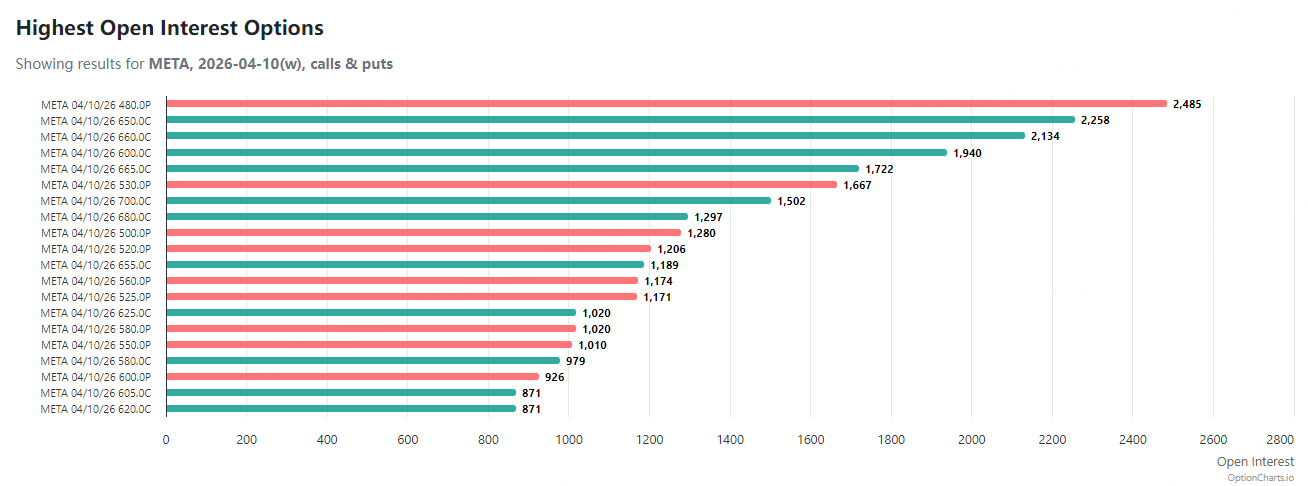
Looking at contracts expiring April 10, 2026, open interest (OI) is concentrated around several key strikes:
-
$480 put: OI of 2,485 contracts
-
$650 call: OI of 2,258 contracts
-
$660 call: OI of 2,134 contracts
These levels may act as near-term zones of price contention.
Block Trades Signal Institutional Positioning
The most notable activity in Meta options comes from a series of large block trades, offering insight into institutional positioning:
1. Bullish/Neutral Positioning: Large-Scale ITM Put Selling
-
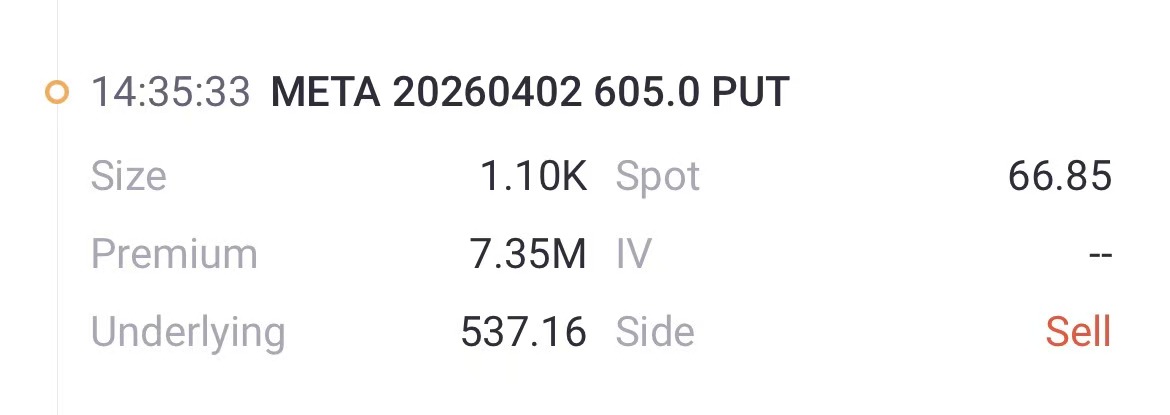
Sell $605 put (Apr 2 expiry): $7.35 million notional
-
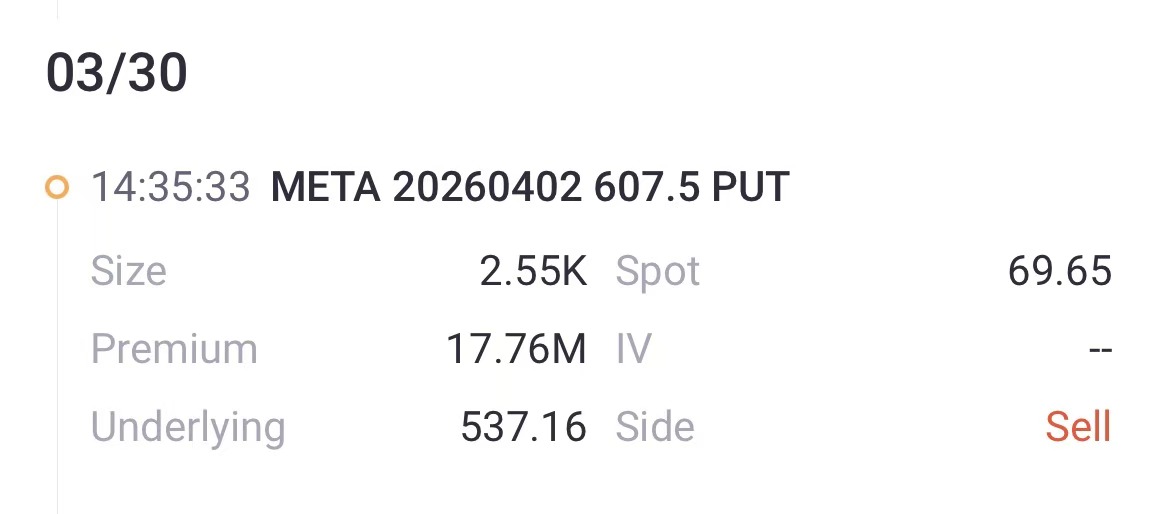
Sell $607.5 put (Apr 2 expiry): $17.76 million
-
Sell $650 put (Sep 18 expiry): $17.40 million
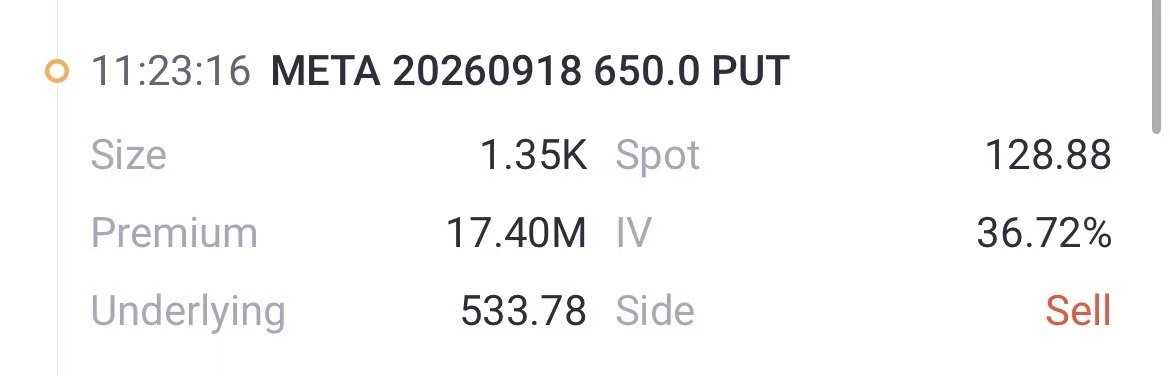
All these trades involve strikes (605, 607.5, 650) well above the current spot price of $572.13, making them in-the-money puts.
By selling these options, traders are collecting substantial premiums while expressing confidence that the stock will hold firm or trade sideways. This is typically viewed as a bullish-to-neutral income strategy.
2. Structured Trade: Bullish Diagonal Spread
-
Sell $650 put (Sep 18 expiry): ~$17.4 million
-
Buy $500 put (Dec 18 expiry): ~$14.09 million
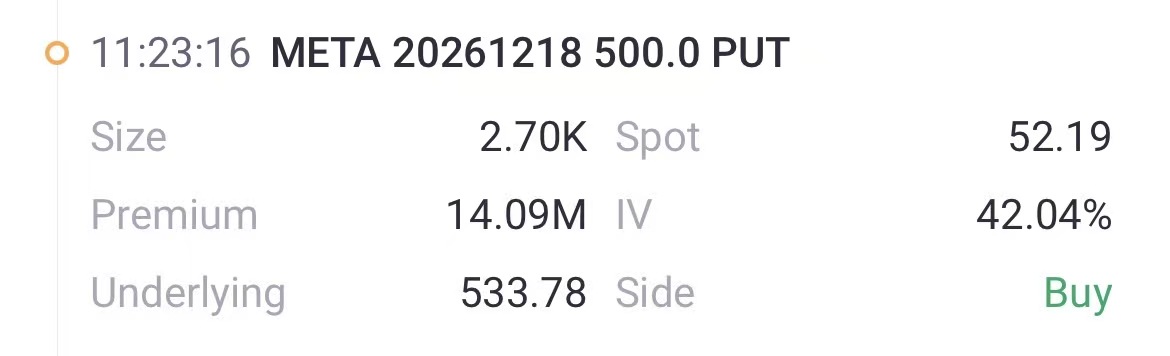
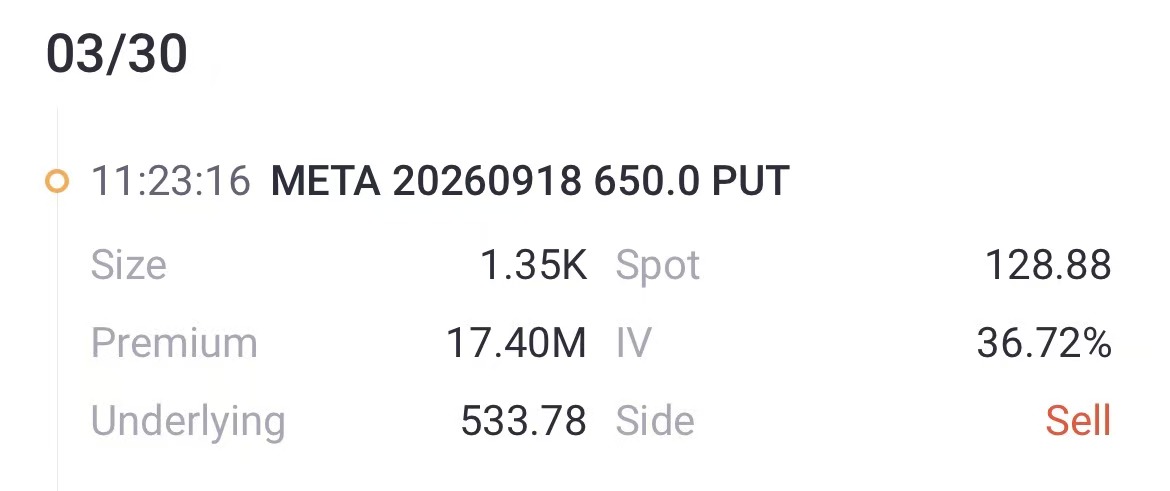
The key risk lies in a sharp near-term decline, which could lead to rapidly expanding losses.
Strategy Takeaways
With implied volatility at elevated levels (IV percentile 88.45%), option-selling strategies appear relatively favorable. Investors expecting range-bound trading may consider selling out-of-the-money options—such as calls above $600 or puts below $540—to capture time decay.
However, selling naked options, particularly puts, carries significant margin requirements and substantial downside risk. For more controlled exposure, spread strategies may be preferable:
-
Bear put spreads can hedge downside while reducing premium costs
-
Iron condors allow investors to monetize high volatility while capping risk within a defined range
In sum, Meta’s options market is currently pricing in elevated uncertainty, with institutional flows reflecting sharply divided views on the stock’s near-term trajectory.
$(META)$
Comments